Total Skin Electron Beam Therapy (TSEBT)

RadOnc Dr Revanth M Khandke

Overview

Total Skin Electron Beam Therapy (TSEBT) is a specialized radiation therapy technique used primarily for the treatment of cutaneous T-cell lymphomas, particularly mycosis fungoides.

Clinical Efficacy

T1 Disease (Early-Stage)

Efficacy Profile

  • Complete Response (CR) Rate: >90%
  • 15-year Relapse-Free Survival: 40% in patients with T1 disease
  • Current Recommendation: No longer recommended for such limited disease

Recurrent Disease Patterns

  • Most commonly restricted to <5% of skin surface area
  • Amenable to local salvage therapy with topical therapy or limited superficial radiation
Important Note: When successful salvage of limited recurrences is taken into account, relapse-free survival improves to 70% at 15 years
T2 Disease

Clinical Outcomes

  • Complete Response Rate: 76% to 90%
  • 5-Year Relapse-Free Survival: 50%
  • 10-Year Relapse-Free Survival: 10%

Adjuvant Treatment Benefits

Adjuvant PUVA:

  • Improves 5-year relapse-free survival to 85%

Nitrogen Mustard:

  • Improves 10-year relapse-free survival to 40%
  • Significantly improves relapse-free survival when combined with TSEBT
T3 Disease (Cutaneous Tumors)

Treatment Efficacy

  • Complete Response Rate: 44% to 54%
  • Much greater than any other single modality
  • TSEBT is less effective compared to earlier stages but still yields impressive results

Treatment Recommendations

  • Adjuvant treatment should be considered
  • Retrospective studies suggest nitrogen mustard may increase durability of response

Alternative Approaches

  • Combination of nitrogen mustard and local superficial radiation
  • May be considered for tumors localized to a small percentage of skin surface
Boost Treatment Considerations:
  • Supplemental boosts should be considered for patients with tumors
  • Boost treatment should be provided concomitantly with initiation of TSEBT or prior to its initiation
  • Purpose: Diminish thickness of lesion so electrons from TSEBT can effectively penetrate the entire lesion
T4 Disease (Erythrodermic Mycosis Fungoides)

Disease Without Peripheral Circulation Involvement (T4N0)

  • Response Rate: 70% to 100%
  • 5-Year Progression-Free Survival: 25% to 69%

Disease With Peripheral/Extracutaneous Involvement

  • TSEBT is less effective
  • Response Rate: Decreases to 74%
  • Progression-Free Survival: Decreases to 36%

Synergistic Treatment Approach

TSEBT + Extracorporeal Photopheresis (ECP):
  • TSEBT appears to be synergistic with ECP
  • Combination associated with improved disease-specific survival
  • Decreased levels of circulating malignant cells

Technique

Important: TSEBT is technically challenging and should only be attempted in centers with special expertise in its provision, including skilled physics support.

Technical Setup

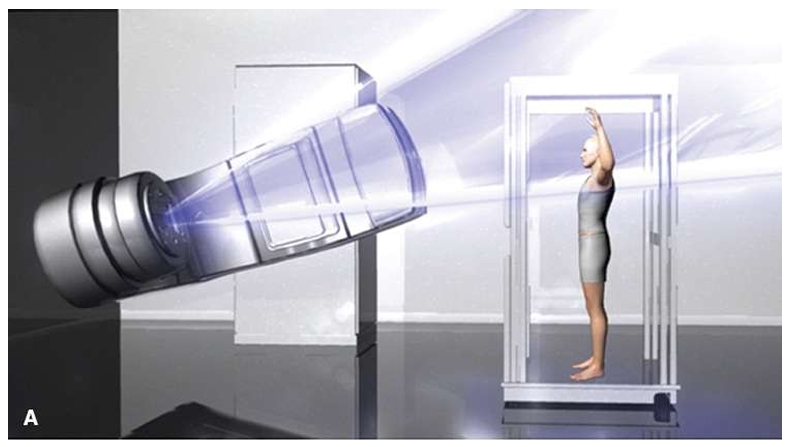
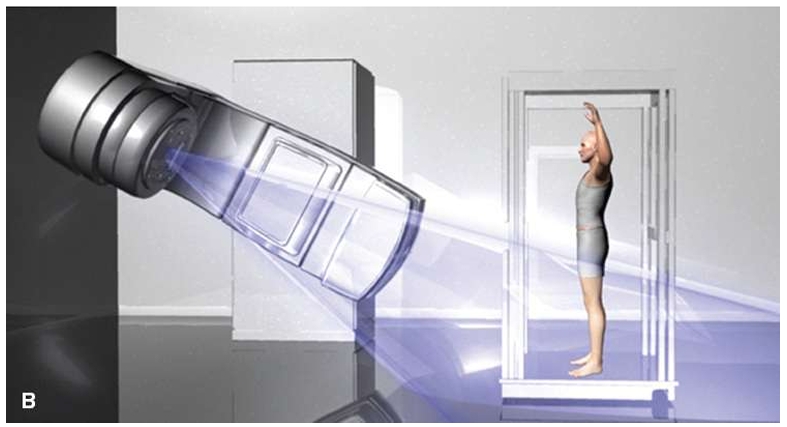
  • Electron Energy: 6 to 9 MeV electrons generated by medical linear accelerator
  • Patient Position: Patient stands behind polycarbonate screen
  • Distance: 3.8 m from the linear accelerator head
  • Screen Function: Polycarbonate screen scatters incident electron beam and contributes to improved surface dose

Treatment Cycles

  • Treatment provided in "cycles"
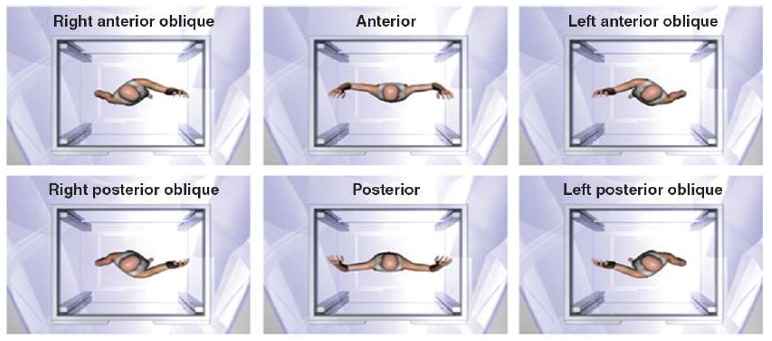
  • One Cycle Composition: Treatment in six different positions over 2 days (three positions each day)
  • Dose per Cycle: Typically 2 Gy to entirety of skin
  • Frequency: Two cycles usually administered per week
  • Purpose: Six positions optimize dose distribution at skin surface

Treatment Positions

Cycle Day 1 (Yale and Stanford Protocol):

  • Anterior position
  • Right posterior oblique position
  • Left posterior oblique position

Cycle Day 2:

  • Posterior position
  • Right anterior oblique position
  • Left anterior oblique position

Dual-Field Technique

  • Used to deliver treatment to superior and inferior field
  • Gantry Angle: 16 to 17.5 degrees above and below horizontal
  • Specific angle dependent upon individual machine characteristics

Dose Distribution at Depth

Yale and Stanford Protocol:

Depth Dose Percentage
1 mm Maximum dose (100%)
6 to 7 mm 80% dose
12.5 mm 20% dose

Dose and Fractionation

Standard Dosing Protocol

  • Course Duration: Two cycles per week for 9 weeks
  • Total Dose: 36 Gy to skin surface
  • Rationale: Sublethal damage repair does not appear to be major factor in MF response to ionizing radiation

Dose-Response Relationship

Total Dose Complete Response Rate
<10 Gy 18%
10 to 20 Gy 55%
20 to 25 Gy 66%
25 to 30 Gy 75%
30 to 36 Gy 94%

Important Consideration:

Lower doses yield impressive rates of overall response (defined as >50% reduction in cutaneous disease), overall survival, progression-free survival, and relapse-free survival rates. However:

  • Relapse rates are relatively high even when CR is obtained
  • The absolute benefit of a CR relative to increased side effects at higher doses is unclear

Reduced-Dose TSEBT

Application of reduced-dose TSEBT (10 to 20 Gy) in combination with additional therapies may be a viable alternative to the current standard of 36 Gy.

Low-Dose TSEBT Clinical Trials

Stanford/MD Anderson Trial:

  • Study Population: 33 patients with stage IB to IIIA disease
  • Treatment: 12 Gy TSEBT over 12 weeks
  • Complete Response Rate: 27%
  • Overall Response Rate: 88%
  • Median Time to Clinical Benefit: 70.7 weeks (time to which another total skin therapy or systemic therapy was required for management)
Advantages of Low-Dose Approach:
  • Allows more frequent use of TSEBT for duration of patient's illness (often many years)
  • Toxicity significantly less than with conventional dose treatment

Supplemental Treatments

Need for Supplemental Doses

The six treatment positions in TSEBT maximize unfolding of the skin and exposure of the skin surface to the incident electron beam, but certain areas remain obscured and require supplemental doses.

Obscured Areas Requiring Supplementation:
  • Soles of the feet
  • Perineum
  • Scalp

Target Dose: Minimum of 20 to 28 Gy at depth of approximately 4 mm

Supplemental Treatment Techniques

Feet and Perineum Treatment

120-kV Superficial Photons:

  • Half-value layer (HVL): 4.2-mm Al
  • Dose: 1 Gy/fraction for soles of feet
  • Dose: 1 Gy/fraction for perineum

Low-Energy Electrons (6 MeV):

  • Used with 1-cm bolus
  • Dose: 1 Gy/fraction for soles of feet
  • Dose: 1 Gy/fraction for perineum
Scalp Treatment

Angled Electron Reflector Method:

  • Scalp treated by placing angled electron reflector above patient

Alternative Approach:

  • Supplemental boosting
  • Incorporated in some centers as an alternative approach
Additional Areas for Supplementation

Other Areas That May Need Supplemental Dose:

  • Thick cutaneous tumors
  • Skin folds secondary to body habitus

The need for supplemental dose to such areas is based on the judgment of the radiation oncologist.

Side Effects

Patient Perception:

In a review of perceptions of MF therapy, patients overall considered TSEBT to be a more difficult treatment to endure compared to other treatments.

Important: Patients should be advised that symptoms such as pruritus and cutaneous erythema may be exacerbated during therapy.

Acute Side Effects

Side Effect Description
Xerosis Dry skin
Dry Desquamation Peeling of skin
Extremity Edema Swelling of arms/legs
Blister/Bullae Formation Particularly over lower extremities
Alopecia Hair loss from scalp, eyebrows, eyelashes, and body
(Usually regrows, but may be lost)
Nail Changes Nails may ultimately be lost but usually regrow
Hypohydrosis Secondary to damage to sweat glands
Nasal Irritation Dryness and irritation may result in nose bleeds
Gynecomastia Rare occurrence

Late/Chronic Side Effects

Late/chronic side effects are minimal and include:

  • Cataract formation
  • Chronic xerosis
  • Persistent alopecia
  • Dystrophic nails
  • Telangiectasia
  • Secondary skin cancers including:
    • Squamous cell carcinomas
    • Basal cell carcinomas
    • Melanomas
Infection Risk:

Clinicians should be vigilant for the possibility of active cutaneous infection during the course of therapy.

Protective Measures to Minimize Side Effects

Areas most susceptible to TSEBT are blocked during certain cycles of treatment:

Eye and Lens Protection
  • Method: Combination of internal/external shields
  • Selected based upon proximity of clinical disease
  • Internal Eyeshields Usage: If used, only for portion of therapy (7 to 20 Gy)
Lips, Hands, and Fingernails
  • Blocking Method: Lead mitts or fingernail shields
  • Applied as clinical circumstances warrant
Feet
  • Blocking Method: Footboards
  • Used for a portion of the treatment
Testicular Protection
  • Method: Testicular shield
  • May be used during perineal boost treatments

IMAGE

STANFORD CRITERIA
image

GANTRY POSITION

image image